Welcome to Contract for Deed Guys in Minnesota

If you have been exploring ways to buy a home in Minnesota without going through a traditional bank, contract for deed has probably come up. And if you are asking whether it is actually worth it, that is the right instinct. It means you are not just chasing a shortcut. You are trying to make a real decision.
The short answer is: it depends. Contract for deed can be a legitimate and practical path to homeownership in Minnesota for the right buyer in the right situation. It can also be the wrong move if the timing, the terms, or the deal structure are not in your favor.
This article will walk you through when it tends to work, when it does not, and the questions worth asking before you commit.
The Short Answer for Minnesota Buyers
Contract for deed is worth considering in Minnesota if you cannot currently qualify for a conventional mortgage but you have steady income, some funds available for a down payment, and a realistic plan for where this goes over time.
It is not a magic solution. It is a structured agreement between a buyer and a seller, and like any financial commitment, the outcome depends heavily on how well that structure is set up from the start.
At Contract For Deed Guys, we have worked through enough of these transactions to know that the buyers who come out ahead are almost always the ones who came in with a clear head and realistic expectations, not the ones who were just relieved to get a yes from someone.
When Contract for Deed Can Be Worth It in Minnesota
Buyers with a clear repayment plan
The deals that work best tend to involve buyers who already have a game plan. They know why they cannot get a traditional mortgage right now, they know what it will take to change that, and they are treating the contract for deed period as a bridge, not a permanent solution.
For example, if you are a self-employed buyer whose income is real but difficult to document the way traditional lenders require, a contract for deed gives you time and stability while your financial picture becomes easier to verify. That is a practical use of this structure.
If you plan to refinance into a conventional loan after a few years of on-time payments and credit improvement, that is a plan. Going in without that kind of thinking tends to create problems later.
Practical tip: Before you sign anything, write out a rough timeline for yourself. What changes in year one, year two, year three? What has to happen for you to either refinance or pay this off? If you cannot sketch that out, the deal may not be the right fit yet.
Buyers with limited bank financing options
Contract for deed exists precisely because traditional mortgage approval leaves a lot of people out. That is not a flaw in the system, it is just reality. Banks underwrite to specific criteria. If you fall outside those criteria, whether because of past credit events, income type, or timing, that does not mean homeownership should be off the table.
In Minnesota, we see this regularly with buyers who went through a bankruptcy or foreclosure a few years back, buyers who are independent contractors or business owners, and buyers who are financially stable today but have a complicated history that lenders flag automatically.
For those buyers, contract for deed can genuinely fill a gap that would otherwise mean renting indefinitely. That has real value.
Buyers who understand the contract terms
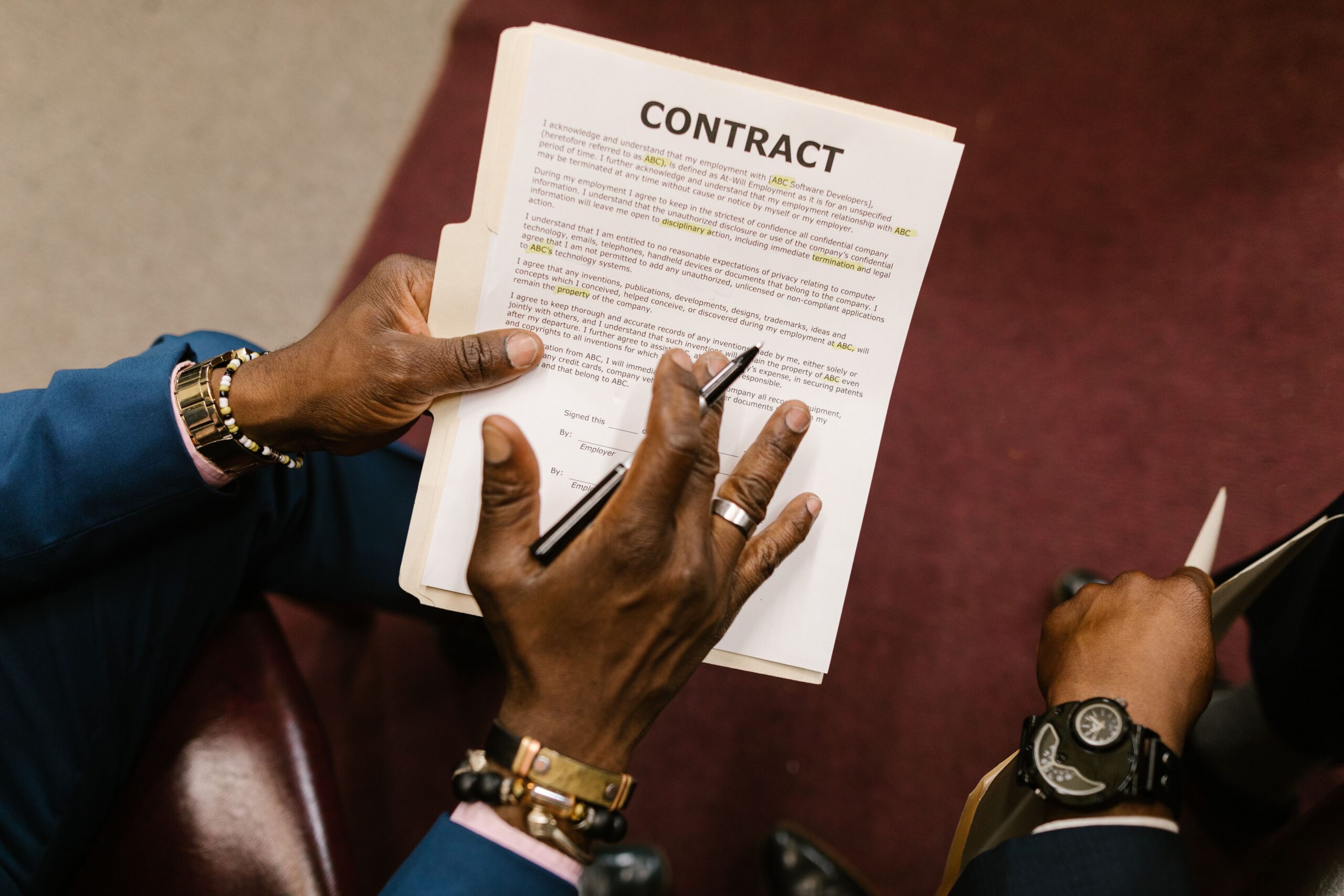
This one gets overlooked more than anything else. The buyers who benefit most from contract for deed are the ones who actually read the agreement, ask questions, and understand what they are committing to before they sign.
The contract governs everything: the payment amount, the interest rate, what happens if you miss a payment, who handles taxes and insurance, and how the eventual title transfer works. If any of those pieces are unclear, that is not something to brush past.
One thing we have learned from structuring these transactions on the seller side is that problems almost never start at the end of a deal. They start at the beginning, when terms were not clear or were not realistic for the buyer going in.
When Contract for Deed May Not Be Worth It
Weak contract terms
Not all contract for deed deals are created equally. Some are structured fairly, with clear payment schedules, reasonable interest rates, and straightforward default language. Others are not.
If the interest rate is significantly higher than what the broader market reflects, if the balloon payment timeline is unrealistically short, or if the default and cancellation terms are heavily one-sided, those are things worth pausing on. A deal with bad terms does not become a good deal just because someone said yes to you when a bank did not.
Practical tip: Before signing, have someone else look at the agreement. An attorney familiar with Minnesota real estate is the gold standard. At a minimum, have someone you trust to review the default and cancellation sections specifically.
Unstable affordability
The monthly payment has to be genuinely affordable, not just barely possible on a good month. If making the payment requires everything to go right every single month, that is a fragile position to be in.
Missing payments under a contract for deed agreement can trigger cancellation proceedings. In Minnesota, that process can move relatively quickly compared to what many buyers expect. We have seen situations where buyers were caught off guard simply because they did not understand how little margin for error the agreement gave them.
If your income is variable, your current obligations are already stretched, or your financial situation feels unstable, that is worth addressing before committing to a home purchase under any structure.
Better traditional options are available
If you can qualify for a conventional mortgage today, or if you could with a few months of preparation, that path is almost certainly better. A traditional mortgage typically offers stronger buyer protections, a more predictable rate environment, and a clearer path to full ownership.
Contract for deed makes the most sense when traditional financing is genuinely out of reach for now, not as a workaround when conventional options are actually on the table.
Questions to Ask Yourself Before Saying Yes
Before committing to a contract for deed in Minnesota, it is worth working through these honestly:
- Can I comfortably afford this payment every month, not just in a best-case scenario?
- Do I understand what happens if I miss a payment, and have I read those sections in the contract?
- Do I have a realistic plan for what comes next, whether that is refinancing, paying off, or something else?
- Is the interest rate and overall cost structure reasonable compared to what is available in the market?
- Have I had someone review the agreement, ideally an attorney?
- Am I buying because this is a good opportunity, or because I am frustrated with other options and taking the first thing available?
That last question is an important one. Desperation and good decision-making rarely go together. If this feels like the right move for the right reasons, that is a good sign. If it feels like a relief more than a decision, it may be worth slowing down.
Best Alternatives to Compare in Minnesota
Mortgage
If you are closer to traditional financing than you think, it is worth talking to a lender before ruling it out. FHA loans, for example, have lower credit score thresholds than many buyers realize. If a mortgage is achievable within the next six to twelve months with some focused preparation, that timeline may be worth it for the added protections and stability it brings.
Rent-to-own
Rent-to-own is sometimes discussed as a middle ground between renting and buying. In practice, the terms vary widely and the commitment structure is different from contract for deed. Whether it is the better option depends on your specific situation, the available inventory, and the terms of the agreement in front of you.
Waiting and preparing longer
This is not a popular answer, but it is sometimes the right one. If your income is unstable, your savings are very low, or your financial situation has not yet stabilized after a difficult period, a few months of focused preparation can change what is available to you dramatically.
That might mean building up a larger down payment, improving your credit profile, or getting your income documentation in cleaner order. None of that is exciting, but it can make the eventual deal, whether contract for deed or conventional, significantly better.
Frequently Asked Questions
Is contract for deed a good idea in Minnesota? It can be, for the right buyer and the right deal. Buyers with steady income, a realistic plan, and a clear understanding of the contract terms tend to do well. Buyers who enter without fully understanding the terms or without a plan for the future tend to struggle.
What are the risks of contract for deed in Minnesota? The main risks involve default and cancellation. If a buyer misses payments, the cancellation process in Minnesota can be faster than many people expect. Understanding the default language in the contract before signing is essential.
Can you lose money on a contract for deed in Minnesota? Yes. If a buyer defaults and the contract is cancelled, payments already made may not be recoverable depending on the terms. This is one reason why reading the agreement carefully and working with sellers who structure deals transparently matters.
How does contract for deed end in Minnesota? The agreement ends when the buyer completes the payment terms and obtains full title, refinances into a conventional loan, pays off the balance early if the contract allows it, or defaults and the contract is cancelled.
Is contract for deed better than renting in Minnesota? For buyers who are genuinely ready and in a position to make consistent payments, contract for deed can build toward ownership in a way that renting does not. For buyers whose situation is still unstable, renting may carry less risk in the short term.
Contract For Deed Guys works with buyers across Minnesota to structure transparent, affordable contract for deed transactions. If you are trying to figure out whether this path makes sense for your situation, the first step is a straightforward conversation about where you are and what is realistic.